- MALIK SUPER SPECIALITY HOSPITAL HANSI
- info@maliksuperspecialityhospital.com

OVARIAN CYSTS: Symptoms, Causes, Types, Diagnosis and Treatment

Protein in Urine: What Does It Mean for Your Health?
August 7, 2026
URINARY INFECTIONS IN WOMEN: SYMPTOMS, PREVENTIONS AND TREATMENT
August 21, 2026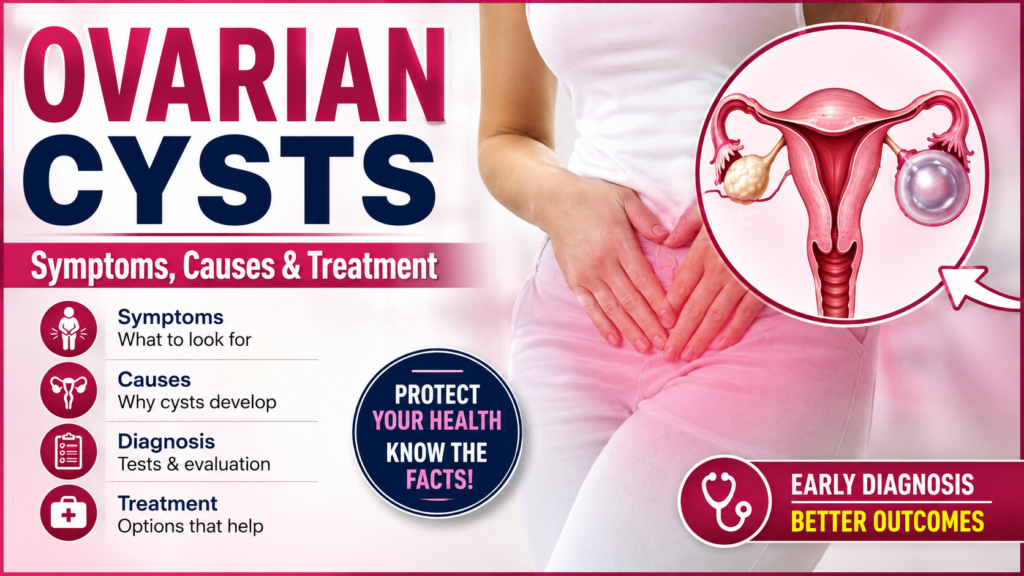
Ovarian cysts are fluid-filled sacs that develop in or on an ovary. They are common, particularly during the reproductive years, and many cause no symptoms or health problems. In many cases, cysts disappear naturally within a few months without treatment. However, some cysts can become large, rupture, or cause the ovary to twist, making ovarian cyst treatment and consultation with the Best Gynecologist in Hansi important when symptoms occur.
Understanding what causes cysts, how they are diagnosed, and when treatment may be necessary can help women make informed decisions about their reproductive health.
What Are Ovarian Cysts?
The ovaries are two small reproductive organs located on either side of the uterus. They release eggs during the menstrual cycle and produce important hormones such as estrogen and progesterone.
An ovarian cyst develops when a sac or pocket forms in or on an ovary. Most cysts are benign, meaning they are not cancerous. Functional cysts, which develop as part of the normal menstrual cycle, are particularly common and often resolve without treatment.
Although many cysts are harmless, their size, appearance, type, and symptoms can determine whether monitoring or treatment is needed.
Common Types of Ovarian Cysts
There are several types of ovarian cysts. Understanding the differences can help explain why a doctor may recommend observation in one situation and treatment in another.
Functional Cysts
Functional cysts are associated with the normal menstrual cycle. They include follicular cysts and corpus luteum cysts. A follicular cyst may develop when a follicle does not release an egg as expected, while a corpus luteum cyst can occur after ovulation when fluid accumulates in the follicle.
These cysts are generally harmless and frequently disappear within two or three menstrual cycles.
Dermoid Cysts
Dermoid cysts, also called teratomas, develop from reproductive cells and may contain tissues such as hair, skin, or teeth. They are usually benign but can sometimes grow large enough to cause complications.
Cystadenomas
Cystadenomas develop from cells on the surface of an ovary. They may contain watery or mucous material and can become quite large. Depending on their size and characteristics, medical monitoring or surgery may be recommended.
Endometriomas
Endometriomas are associated with endometriosis. They develop when tissue similar to the lining of the uterus grows outside the uterus and involves the ovary. These cysts may be associated with pelvic pain and can sometimes affect fertility.
What Causes Ovarian Cysts?
The most common cause is the normal menstrual cycle. During ovulation, follicles develop in the ovaries and usually release an egg. Sometimes a follicle continues growing or fluid accumulates after ovulation, creating a functional cyst.
Other factors associated with ovarian cysts can include hormonal problems, pregnancy, endometriosis, certain fertility medications, severe pelvic infections, and a previous history of cysts.
Having a cyst does not automatically mean that there is a serious underlying condition. The appropriate evaluation depends on individual symptoms and the cyst’s characteristics.
Symptoms to Watch For
Many ovarian cysts do not produce noticeable symptoms and are discovered during a routine pelvic examination or an imaging test performed for another reason.
When symptoms occur, they may include:
- Pelvic pain that may be dull, sharp, or intermittent
- A feeling of fullness, pressure, or heaviness in the abdomen
- Abdominal bloating
- Pain associated with certain activities
- Changes in menstrual symptoms in some cases
Larger cysts are more likely to produce discomfort because they can put pressure on nearby organs.
Persistent or unusual pelvic symptoms should be discussed with a healthcare professional rather than being attributed to a cyst without proper evaluation.
When Is an Ovarian Cyst an Emergency?
Most cysts do not cause serious complications, but occasionally a cyst can rupture or contribute to ovarian torsion. Ovarian torsion occurs when the ovary twists and may reduce or stop its blood supply.
Seek immediate medical attention if you experience sudden and severe abdominal or pelvic pain, particularly when it occurs with fever, vomiting, dizziness, weakness, rapid breathing, or other signs of serious illness.
Prompt assessment is important because complications such as torsion or significant bleeding may require urgent treatment.
How Are Ovarian Cysts Diagnosed?
A healthcare professional may begin with a medical history and pelvic examination. If a cyst is suspected, imaging can help determine its location, size, and appearance.
A pelvic ultrasound is commonly used to evaluate an ovarian cyst. It can help show whether the cyst is fluid-filled, solid, or has other characteristics that require further assessment. Depending on the situation, pregnancy testing, blood tests, or other investigations may also be considered.
In selected cases, laparoscopy may be used. This minimally invasive surgical procedure allows a healthcare professional to directly examine the pelvic organs and may also allow treatment of a cyst during the same procedure.
Ovarian Cyst Treatment Options
Treatment depends on several factors, including the woman’s age, symptoms, cyst size, appearance, type, and whether the cyst is changing over time.
Watchful Waiting
If a cyst is small, fluid-filled, and not causing symptoms, a doctor may recommend observation rather than immediate treatment. Follow-up appointments and ultrasound examinations may be used to determine whether the cyst is shrinking or changing.
This approach is common because many functional cysts resolve naturally.
Medication
Hormonal contraceptives may sometimes be recommended to reduce ovulation and lower the chance of developing additional functional cysts. However, hormonal contraceptives generally do not make an existing ovarian cyst disappear.
Medication choices should always be discussed with a qualified healthcare professional because treatment needs vary from person to person.
Surgery
Surgery may be considered when a cyst is large, persistent, growing, causing significant symptoms, or has features that require further evaluation. In some cases, the cyst can be removed while preserving the ovary. In other situations, removal of the affected ovary may be necessary.
Whenever possible, treatment decisions consider reproductive goals and the preservation of healthy ovarian tissue.
Can Ovarian Cysts Affect Fertility?
An ovarian cyst does not automatically mean that a woman will have fertility problems. Many common functional cysts do not interfere with fertility. However, certain conditions associated with cysts, particularly endometriosis, may affect the ability to become pregnant.
Polycystic ovary syndrome (PCOS) can also involve multiple small ovarian follicles and irregular ovulation. PCOS is different from having a single typical ovarian cyst, and the two conditions should not be considered the same.
Women who are trying to conceive and have been diagnosed with an ovarian cyst should discuss their individual situation with a gynecologist.
Can Ovarian Cysts Be Prevented?
There is no guaranteed way to prevent most ovarian cysts. Because many develop as part of the normal menstrual cycle, they can occur even when a woman has no known health problems.
Regular gynecological care and paying attention to changes in menstrual patterns can help identify problems earlier. Keeping track of unusual pelvic pain, bloating, menstrual changes, or other persistent symptoms can also provide useful information during a medical consultation.
When Should You See a Doctor?
You should consider consulting a gynecologist if you experience persistent pelvic pain, unexplained abdominal fullness, unusual menstrual symptoms, or symptoms that continue for several cycles.
Medical evaluation is especially important if you already know that you have an ovarian cyst and your symptoms are becoming worse. Sudden severe pelvic or abdominal pain, especially with vomiting, fever, dizziness, or weakness, requires urgent medical attention.
Conclusion
Ovarian cysts are common and often harmless, particularly when they are related to the normal menstrual cycle. Many disappear naturally without treatment. Nevertheless, persistent symptoms, large or unusual cysts, and sudden severe pain should not be ignored, and Best General Surgeon Doctor in Hansi should be consulted with a qualified healthcare professional when necessary.
Diagnosis commonly involves a pelvic examination and ultrasound, while treatment can range from observation to medication or surgery depending on the individual situation. Understanding symptoms and seeking appropriate medical advice can help women receive timely care while avoiding unnecessary treatment. If you have concerns about an ovarian cyst or ongoing pelvic symptoms, consult a qualified gynecologist for personalized evaluation and guidance.