- MALIK SUPER SPECIALITY HOSPITAL HANSI
- info@maliksuperspecialityhospital.com

Low Sodium Salt: Game Changer for Kidney Health or Just a Myth?

Water Intake for Kidney Patients: Complete Hydration Guide
May 14, 2026
World No Tobacco Day: Raising Awareness for a Healthier, Tobacco-Free Future
May 30, 2026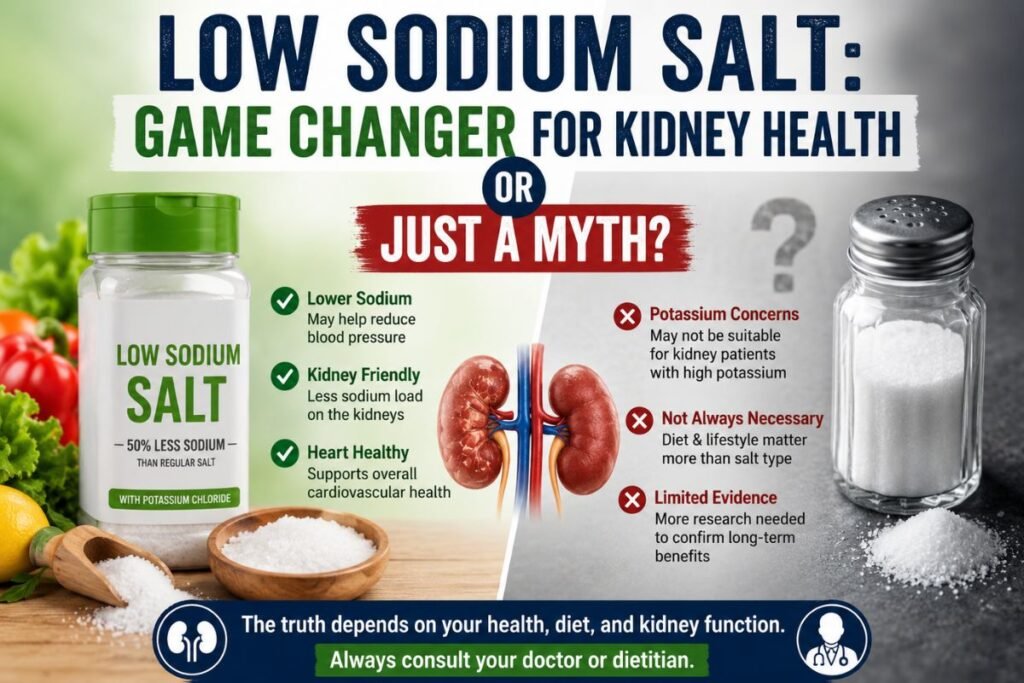
Can switching to low sodium salt really protect your kidneys, or could it create new health risks? Here’s what kidney patients and health-conscious individuals need to know before making the change.
Salt is a basic part of almost every meal. From homemade curries and soups to packaged snacks and restaurant food, sodium is everywhere. While the body needs some sodium to function properly, too much of it can create serious health problems, especially for people dealing with kidney disease, high blood pressure, or heart issues. Many patients now consult the Best Urologist Doctor in Hansi to better understand how sodium intake affects kidney function and overall urinary health. Experts often recommend balanced nutrition, proper hydration, and controlled salt consumption to reduce stress on the kidneys and support long-term wellness.
This is where Low Sodium Salt for Kidney Health has gained attention. Many people believe it is a healthier alternative to regular table salt and a simple way to reduce sodium intake without sacrificing taste. But is it truly beneficial for kidney patients, or is it just another health trend?
The answer is more complicated than a simple yes or no.
In this detailed guide, we’ll explore how low sodium salt works, its benefits, possible risks, and whether it is actually safe for people with kidney concerns.
Understanding Sodium and Kidney Health
The kidneys play a major role in balancing minerals and fluids in the body. One of their key jobs is controlling sodium levels. When sodium intake becomes too high, the kidneys have to work harder to remove excess sodium through urine.
Over time, too much sodium can lead to:
- High blood pressure
- Fluid retention
- Swelling in the body
- Increased strain on kidneys
- Higher risk of kidney disease progression
A proper Low Sodium Diet for Kidney Health is often recommended by doctors because lowering sodium intake can help reduce pressure on the kidneys and improve overall cardiovascular health.
Many kidney patients are advised to limit sodium intake to around 1500–2300 mg per day depending on their condition.
What Is Low Sodium Salt?
Low sodium salt is a modified version of regular table salt. It usually contains:
- Less sodium chloride
- More potassium chloride
Traditional table salt is almost entirely sodium chloride. In contrast, low sodium salt replaces part of the sodium with potassium to reduce total sodium intake.
This makes it a popular Best Salt Alternative for Kidney Patients and for individuals trying to manage blood pressure.
Some common labels include:
- Reduced sodium salt
- Lite salt
- Heart-friendly salt
- Mineral salt
These products are marketed as healthier choices for people wanting better heart and kidney health.
Why Is Low Sodium Salt Becoming Popular?
Modern diets contain excessive sodium due to processed foods, fast food, sauces, chips, and ready-to-eat meals. Many people consume far more sodium than recommended without realizing it.
Health experts now encourage sodium reduction because excess sodium is strongly connected with:
- Hypertension
- Heart disease
- Stroke
- Kidney damage
As awareness grows, many families are turning to Kidney-Friendly Low Sodium Salt products as an easy dietary improvement.
The idea sounds appealing:
“Eat the same foods but with less sodium.”
But the reality for kidney patients needs careful consideration.
Benefits of Low Sodium Salt for Kidney Health
1. Helps Control Blood Pressure
One of the biggest advantages of Low Sodium Salt for Kidney Health is better blood pressure management.
High blood pressure is both a cause and consequence of kidney disease. Reducing sodium can help lower blood pressure naturally.
Research shows that people who reduce sodium intake often experience:
- Lower systolic blood pressure
- Reduced fluid retention
- Better heart health
- Less stress on kidneys
This is why doctors frequently recommend a Low Sodium Diet for Kidney Health.
2. Reduces Water Retention
Excess sodium causes the body to hold onto water. This can lead to:
- Swollen feet
- Puffy face
- Bloating
- Increased blood pressure
By switching to Kidney-Friendly Low Sodium Salt, some individuals notice less swelling and improved comfort.
This can be especially useful for people with:
- Early-stage kidney disease
- Heart conditions
- Hypertension
3. Supports Heart Health
Kidney health and heart health are deeply connected.
When sodium intake is reduced, the risk of cardiovascular complications may also decrease. Low sodium diets can help improve:
- Blood circulation
- Arterial health
- Fluid balance
For this reason, Best Salt Alternative for Kidney Patients searches have increased significantly in recent years.
4. Encourages Better Eating Habits
Using low sodium salt often makes people more aware of their overall diet.
They begin checking food labels, avoiding packaged foods, and reducing processed snacks. This naturally improves dietary quality and supports a healthier lifestyle.
A good Low Sodium Diet for Kidney Health focuses not only on salt but also on:
- Fresh vegetables
- Lean protein
- Whole grains
- Controlled potassium and phosphorus
- Adequate hydration
The Hidden Concern: Potassium
Here’s where things become important.
Most low sodium salts replace sodium with potassium. While potassium is healthy for many people, it can become dangerous for certain kidney patients.
Healthy kidneys remove extra potassium from the blood. But damaged kidneys may struggle to do this effectively.
As a result, potassium can build up in the bloodstream and cause:
- Muscle weakness
- Irregular heartbeat
- Chest pain
- Heart rhythm problems
- Severe complications
This condition is called hyperkalemia.
That’s why the question “Is Low Sodium Salt Safe for Kidneys” cannot be answered the same way for everyone.
Is Low Sodium Salt Safe for Kidneys?
The Answer Depends on Kidney Function
For people with healthy kidneys or mild kidney concerns, low sodium salt may be beneficial when used in moderation.
However, people with:
- Chronic kidney disease (CKD)
- Advanced kidney disease
- Dialysis treatment
- High potassium levels
must be extremely cautious.
In many cases, doctors advise avoiding potassium-based salt substitutes entirely.
So while Low Sodium Salt for Kidney Health may help some individuals, it can be risky for others.
Always consult a nephrologist or dietitian before switching.
Who May Benefit from Low Sodium Salt?
People who may benefit include:
- Individuals with mild hypertension
- Early-stage kidney disease patients
- People trying to reduce sodium intake
- Individuals at risk of heart disease
- Families aiming for healthier eating habits
When combined with a balanced Low Sodium Diet for Kidney Health, moderate use may support better wellness outcomes.
Who Should Avoid It?
People who should be cautious include:
- Advanced CKD patients
- Dialysis patients
- Individuals with high potassium levels
- People taking potassium-sparing medications
- Those with heart rhythm disorders
For these groups, Kidney-Friendly Low Sodium Salt may not actually be kidney-friendly at all.
Best Salt Alternative for Kidney Patients
If potassium-based salt substitutes are not suitable, there are other ways to reduce sodium while keeping food flavorful.
Here are safer options often recommended as the Best Salt Alternative for Kidney Patients:
Herbs and Spices
Use:
- Garlic powder
- Ginger
- Turmeric
- Basil
- Oregano
- Black pepper
- Coriander
These add flavor without increasing sodium.
Lemon Juice
Fresh lemon enhances taste naturally and reduces the need for extra salt.
Vinegar
A small amount of vinegar can brighten flavors in salads and cooked dishes.
Salt-Free Seasoning Mixes
Many brands now offer sodium-free spice blends designed for healthier cooking.
Fresh Foods Over Processed Foods
The biggest sodium source is often packaged food, not table salt itself.
Avoid:
- Instant noodles
- Chips
- Processed meat
- Pickles
- Frozen meals
A natural Low Sodium Diet for Kidney Health starts with whole foods.
Signs You Are Eating Too Much Sodium
Many people don’t realize their sodium intake is excessive.
Common signs include:
- Frequent thirst
- Swelling
- High blood pressure
- Headaches
- Fatigue
- Bloating
Reducing sodium may help improve these symptoms over time.
Tips for Following a Low Sodium Diet for Kidney Health
Read Food Labels
Check sodium content carefully. Foods labeled “healthy” may still contain large amounts of sodium.
Cook More Meals at Home
Restaurant and fast foods are often extremely high in sodium.
Home cooking gives you better control.
Avoid Processed Foods
Packaged snacks and canned foods are major sodium sources.
Choose fresh ingredients whenever possible.
Use Natural Flavoring
Herbs, spices, garlic, and citrus make food flavorful without excess salt.
Track Daily Sodium Intake
Awareness helps maintain healthier habits.
Common Myths About Low Sodium Salt
Myth 1: It’s Safe for Everyone
False.
People with kidney disease may face potassium-related complications.
Myth 2: It Completely Solves Sodium Problems
False.
Processed foods still contribute huge amounts of sodium.
Myth 3: More Potassium Is Always Better
False.
Too much potassium can be dangerous for kidney patients.
Myth 4: It Tastes Exactly Like Regular Salt
Some people notice a slightly metallic or bitter taste due to potassium chloride.
Scientific Research on Low Sodium Salt
Several studies suggest sodium reduction improves blood pressure and cardiovascular health.
Research also indicates that replacing regular salt with potassium-enriched salt may lower stroke and heart disease risk in some populations.
However, experts repeatedly warn that kidney patients must use caution due to the risk of elevated potassium levels.
This is why individualized medical advice matters.
How Much Sodium Should Kidney Patients Consume?
General recommendations vary depending on medical condition.
Many experts suggest:
- 1500–2300 mg sodium daily
- Lower intake for advanced kidney disease
- Personalized plans for dialysis patients
A healthcare provider can determine the safest target.
Smart Ways to Transition to Lower Sodium Eating
Reducing sodium suddenly can feel difficult because taste buds adapt to salty foods.
Try gradual changes:
Week 1
Reduce processed snacks.
Week 2
Cook more meals at home.
Week 3
Use more herbs and spices.
Week 4
Experiment with Kidney-Friendly Low Sodium Salt if approved by your doctor.
Taste preferences usually adjust within a few weeks.
Final Verdict: Game Changer or Myth?
So, is Low Sodium Salt for Kidney Health truly a game changer?
The answer is:
It can be helpful — but only for the right people.
For individuals with normal kidney function or mild health concerns, reducing sodium intake can improve blood pressure and overall wellness.
But for many kidney patients, especially those with advanced kidney disease, potassium-based low sodium salts may actually create health risks.
That’s why blindly switching salts without medical guidance is not recommended.
Instead, focus on a complete Low Sodium Diet for Kidney Health, including:
- Fresh foods
- Reduced processed meals
- Balanced nutrition
- Controlled sodium intake
- Professional medical advice
When used correctly and safely, low sodium salt can be part of a healthier lifestyle. But it is not a miracle solution, and it is definitely not suitable for everyone.
Conclusion
The conversation around Low Sodium Salt for Kidney Health is important because kidney disease is becoming increasingly common worldwide.
Reducing sodium intake is certainly beneficial, but not every low sodium product is automatically safe for every kidney patient.
Before choosing a Best Salt Alternative for Kidney Patients, always understand your kidney condition, potassium levels, and dietary requirements.
A carefully planned Low Sodium Diet for Kidney Health can support better blood pressure control, heart health, and kidney function — but the safest approach is always personalized care guided by medical professionals.