- MALIK SUPER SPECIALITY HOSPITAL HANSI
- info@maliksuperspecialityhospital.com
First Trimester Pregnancy Care: Essential Tips for a Healthy Start

First Trimester Pregnancy Care: Diet, Health and Safety Tips
October 22, 2026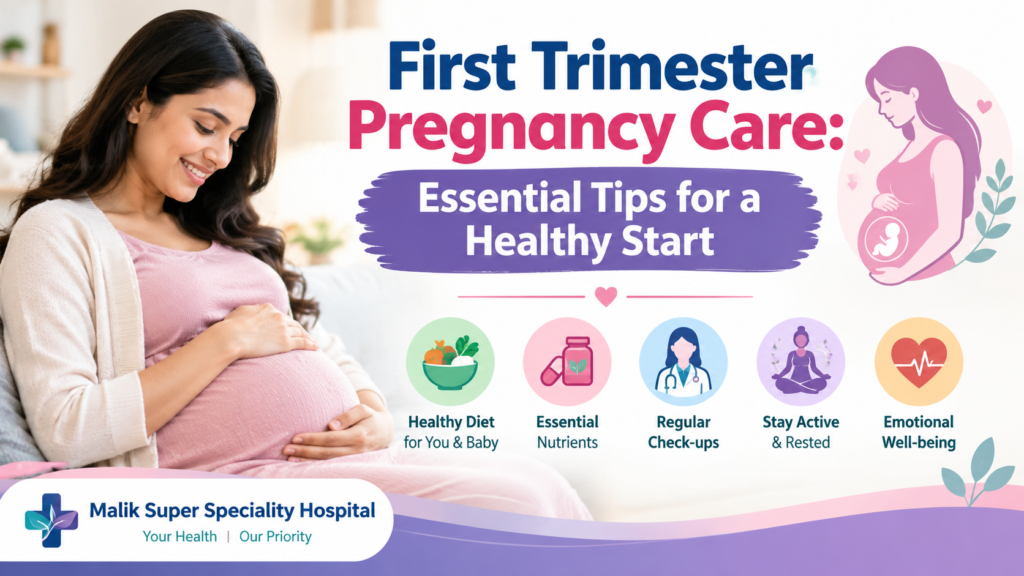
Pregnancy is a beautiful journey that brings excitement, happiness, and many physical and emotional changes. The first trimester, covering weeks 1 to 12, is particularly important because major organs and body systems begin developing during this period. Proper first trimester pregnancy care helps expectant mothers understand their changing bodies, maintain healthy habits, and identify potential complications early. At Malik Super Speciality Hospital, expectant mothers can seek guidance from a best gynaecologist obstretician in Hansi for prenatal consultations and personalised pregnancy care.
During these initial weeks, women may experience morning sickness, fatigue, mood changes, breast tenderness, and frequent urination. Although these symptoms are common, every pregnancy is different and requires individual attention. Maintaining a balanced diet, attending regular prenatal appointments, getting adequate rest, and avoiding harmful substances are essential steps towards a healthy pregnancy. Understanding what to expect during the first trimester can help mothers make informed decisions and create a supportive environment for their developing baby.
Read More: First Trimester Pregnancy Care: Diet, Health and Safety Tips
Why Is First Trimester Pregnancy Care Important?
The first trimester is a critical developmental stage when the baby’s brain, spinal cord, heart, and other essential organs begin forming. During this period, hormonal changes also affect the mother’s physical and emotional well-being.
Following appropriate first trimester pregnancy care practices can help women manage common pregnancy symptoms, identify potential health concerns, and receive timely medical assistance.
Early prenatal consultations are particularly important because doctors can evaluate maternal health, estimate the expected delivery date, recommend necessary screening tests, and provide guidance regarding nutrition and lifestyle changes.
1. Schedule Your First Prenatal Appointment
Booking an appointment with a qualified obstetrician after confirming pregnancy is one of the most important initial steps.
During the first prenatal consultation, your doctor may:
- Review your medical and family history.
- Check blood pressure, weight, and overall health.
- Recommend blood and urine investigations.
- Discuss current medications and supplements.
- Suggest an ultrasound at the appropriate gestational age.
- Explain recommended prenatal screening tests.
Regular medical supervision helps identify conditions such as anaemia, thyroid disorders, diabetes, or other health concerns that may require additional attention.
2. Maintain a Healthy and Balanced Diet
Proper nutrition supports maternal health and contributes to the baby’s growth and development. Following a healthy diet during early pregnancy helps provide the body with important vitamins, minerals, proteins, and energy.
Include the following foods in your daily meals:
- Fresh fruits and green leafy vegetables.
- Whole grains such as oats, brown rice, and whole wheat.
- Protein-rich foods, including pulses, beans, eggs, and thoroughly cooked lean meat.
- Milk, curd, and other pasteurised dairy products.
- Nuts and seeds in moderate quantities.
A healthy diet during early pregnancy should also include adequate water intake and regular meals. Women experiencing nausea may find smaller, more frequent meals easier to tolerate.
Avoid alcohol, unpasteurised dairy products, raw or undercooked meat, and fish containing high mercury levels. Limit caffeine according to your doctor’s recommendations.

3. Take Essential Prenatal Vitamins and Supplements
Certain nutrients are especially important during early pregnancy because they support the baby’s development and help maintain maternal health.
Some of the essential nutrients for pregnant women include:
Folic Acid: Supports early neural tube development. A daily supplement containing 400 micrograms is generally recommended for most women, although some may require a higher prescribed dose.
Iron: Supports healthy red blood cell production and helps prevent iron-deficiency anaemia.
Calcium: Contributes to the development of healthy bones and teeth.
Vitamin D: Supports calcium absorption and normal bone development.
Iodine: Plays an important role in thyroid function and fetal brain development.
Obtaining essential nutrients for pregnant women through balanced meals and doctor-recommended supplements supports overall pregnancy health. Avoid taking additional vitamins or herbal products without medical advice.
4. Manage Common First Trimester Symptoms
Hormonal changes during early pregnancy may cause several uncomfortable symptoms. Understanding these changes is an important aspect of first trimester pregnancy care.
Morning Sickness
Nausea and vomiting are common during the first trimester. Eating small meals, avoiding strong smells, and maintaining hydration may provide relief.
Fatigue
Increased progesterone levels can contribute to tiredness. Prioritise adequate sleep and avoid unnecessary physical exhaustion.
Breast Tenderness
Hormonal fluctuations may cause breast sensitivity. Wearing a comfortable, supportive bra can help reduce discomfort.
Mood Changes
Emotional fluctuations are common during pregnancy. Open communication with family members, adequate rest, and relaxation techniques may help.
Contact your healthcare provider if symptoms become severe or interfere with daily activities.
5. Stay Physically Active and Get Enough Rest
Maintaining a healthy activity level can support physical fitness, emotional well-being, and overall comfort during pregnancy.
For women without medical complications, moderate activities such as walking, swimming, and pregnancy-appropriate yoga may be beneficial.
However, exercise routines should be discussed with a healthcare professional, especially when there are existing medical conditions or pregnancy-related concerns.
Adequate rest is equally important. Aim for approximately seven to nine hours of sleep each night and take short breaks whenever necessary.
Avoid overheating, activities involving a high risk of falling, and exercises that cause dizziness or discomfort.
6. Avoid Harmful Habits and Unsafe Medications
Protecting the developing baby from potentially harmful substances is an essential part of first trimester pregnancy care.
Important precautions include:
- Avoid smoking, vaping, alcohol, and recreational drugs.
- Limit exposure to harmful chemicals and toxic fumes.
- Avoid self-medication and unnecessary supplements.
- Discuss all prescription and over-the-counter medicines with your doctor.
- Maintain good personal and food hygiene.
Do not stop prescribed medication without consulting your healthcare provider, as certain untreated medical conditions may also affect pregnancy health.
7. Understand Important First Trimester Tests
Prenatal screening helps doctors monitor pregnancy development and identify potential complications.
Depending on individual medical requirements, recommended investigations may include:
- Complete blood count (CBC).
- Blood group and Rh factor testing.
- Urine examination.
- Thyroid and blood sugar testing when indicated.
- Screening for selected infections.
- Early pregnancy ultrasound.
- First trimester chromosomal screening, where appropriate.
An ultrasound performed between 11 and 13 weeks plus six days may include a nuchal translucency assessment as part of prenatal screening.
Your obstetrician will explain which investigations are suitable for your pregnancy.
8. Recognise Warning Signs During Early Pregnancy
Although mild discomfort can be normal, certain symptoms require immediate medical attention.
Seek urgent medical care if you experience:
- Heavy vaginal bleeding.
- Severe or persistent abdominal pain.
- Fainting or significant dizziness.
- Severe vomiting with an inability to retain fluids.
- Fever or symptoms suggesting infection.
- Severe one-sided pelvic pain, particularly with bleeding or shoulder-tip pain.
These symptoms do not always indicate a serious complication, but timely medical evaluation is essential.

9. Prioritise Emotional and Mental Well-Being
Pregnancy involves emotional adjustments alongside physical changes. Some women may experience anxiety about their baby’s health, upcoming responsibilities, or lifestyle changes.
An important part of first trimester pregnancy care is maintaining emotional balance through supportive relationships and healthy daily routines.
Discuss concerns with your partner, family members, or healthcare provider. Relaxation exercises, adequate sleep, and enjoyable activities may help manage everyday stress.
If anxiety, sadness, or emotional distress becomes persistent, seek professional support.
Conclusion
The first trimester establishes an important foundation for a healthy pregnancy. Balanced nutrition, appropriate supplements, prenatal examinations, safe physical activity, and emotional support all contribute to maternal and fetal well-being. Following recommended first trimester pregnancy care practices also helps expectant mothers recognise warning signs and make informed health decisions.
For professional pregnancy consultations and personalised medical guidance, Malik Super Speciality Hospital, recognised as a best hospital in Hansi, provides obstetrics and gynaecology services to support women throughout their pregnancy journey.