- MALIK SUPER SPECIALITY HOSPITAL HANSI
- info@maliksuperspecialityhospital.com

Tips After Kidney Transplant: Complete Guide to Recovery and Care

Early Pregnancy Scan: Complete Guide for First-Time Mothers
April 9, 2026
Post LSCS Care Tips & Ovarian Cyst: Complete Recovery Guide
April 22, 2026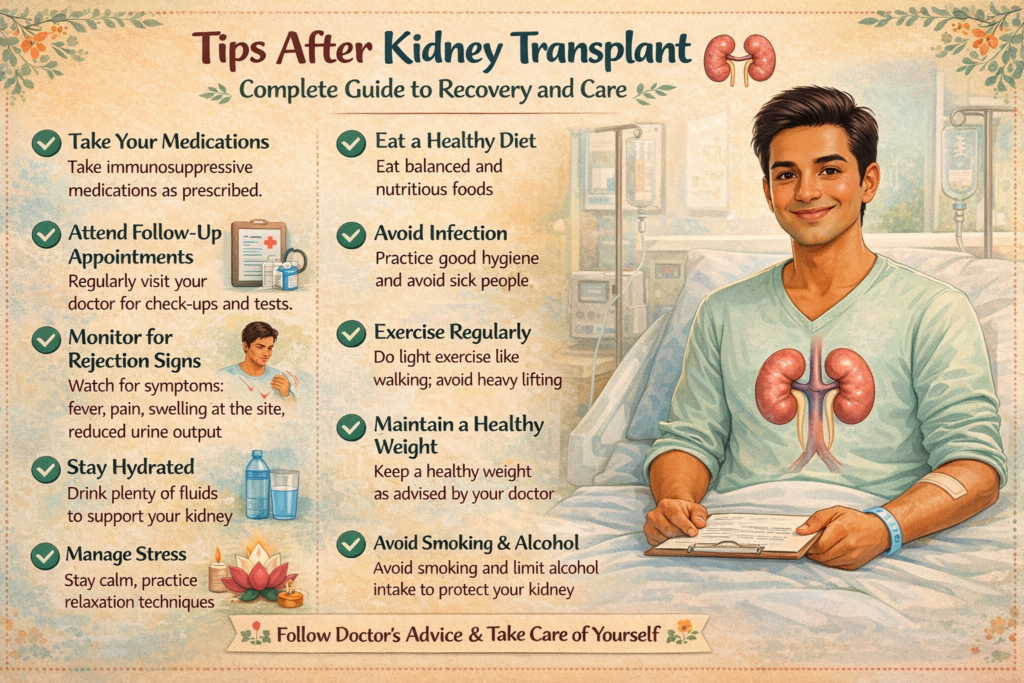
A kidney transplant is a life-changing procedure that offers a fresh start to patients suffering from kidney failure. While the surgery itself is a major milestone, proper recovery and long-term care are equally important for ensuring the success of the transplant. Consulting the Best Urologist Doctor in Hansi during your recovery phase can provide expert guidance and personalized care. Following the right kidney transplant recovery tips can help improve your overall health, prevent complications, and allow you to return to a normal lifestyle.
Understanding the importance of post kidney transplant care is essential because your body needs time to heal and adjust to the new organ. With the right approach, including a balanced diet after kidney transplant, careful monitoring, and necessary precautions after kidney transplant, you can enjoy a healthier and more active life.
Understanding the Recovery Process
Recovery after a kidney transplant varies from person to person, but it generally takes a few weeks to a few months. During this period, your body adapts to the new kidney, and your immune system is carefully managed to prevent rejection.
One of the most important kidney transplant recovery tips is to strictly follow your doctor’s advice. Regular follow-ups, timely medication, and proper rest are crucial during the initial recovery phase. Patients are usually prescribed immunosuppressant medications, which help prevent the body from rejecting the new kidney.
Effective post kidney transplant care also involves monitoring your health closely. You should keep track of your blood pressure, blood sugar levels, and any unusual symptoms. Early detection of problems can prevent serious complications.
Importance of Post Kidney Transplant Care

Proper post kidney transplant care plays a vital role in ensuring the long-term success of the transplant. This includes maintaining hygiene, taking medications on time, and avoiding infections.
Your immune system becomes weaker due to anti-rejection medications, making you more vulnerable to infections. Therefore, maintaining cleanliness, washing hands frequently, and avoiding crowded places are essential precautions after kidney transplant.
Another key aspect of kidney transplant lifestyle changes is attending all scheduled medical appointments. These check-ups help doctors monitor kidney function and adjust medications if needed.
Diet After Kidney Transplant

A healthy and balanced diet after kidney transplant is crucial for recovery and long-term health. Proper nutrition helps your body heal faster, strengthens your immune system, and supports the functioning of the new kidney.
What to Eat
Include fresh fruits, vegetables, whole grains, and lean proteins in your daily meals. Foods rich in vitamins and minerals help boost recovery and overall well-being.
Protein intake is important but should be consumed in moderation. Your doctor or dietitian can guide you on the right amount based on your condition.
Foods to Avoid
Certain foods should be limited or avoided as part of your post kidney transplant care:
- High-sodium foods
- Processed and packaged items
- Raw or undercooked meat
- Unpasteurized dairy products
Following the right diet after kidney transplant also means staying hydrated. Drinking enough water helps your kidney function properly, but always follow your doctor’s recommendations regarding fluid intake.
Lifestyle Changes After Kidney Transplant
Adopting healthy kidney transplant lifestyle changes is essential for long-term success. Your daily routine should include habits that support your overall health and protect your new kidney.
Physical Activity
Light exercise such as walking is recommended during recovery. As your strength improves, you can gradually increase your activity level. Regular exercise helps maintain a healthy weight and improves cardiovascular health.
Sleep and Rest
Getting enough rest is one of the most important kidney transplant recovery tips. Your body needs time to heal, so ensure you get 7–8 hours of sleep every night.
Avoid Smoking and Alcohol
Smoking and excessive alcohol consumption can harm your kidney and overall health. Eliminating these habits is a key part of kidney transplant lifestyle changes.
Precautions After Kidney Transplant
Taking the right precautions after kidney transplant can help prevent complications and ensure a smooth recovery.
Infection Prevention
Since your immune system is suppressed, avoiding infections should be a top priority. Wash your hands regularly, avoid sick individuals, and maintain good personal hygiene.
Medication Adherence
Taking medications exactly as prescribed is one of the most critical kidney transplant recovery tips. Missing doses can increase the risk of rejection.
Sun Protection
Immunosuppressants can increase your risk of skin cancer. Use sunscreen and avoid prolonged sun exposure as part of your post kidney transplant care routine.
Emotional and Mental Well-being
Recovery is not just physical; emotional health is equally important. Many patients experience anxiety or stress after the transplant. Staying positive and seeking support from family, friends, or support groups can make a big difference.
Practicing relaxation techniques like meditation or yoga can also support your mental health and complement your kidney transplant lifestyle changes.
Long-Term Care and Monitoring
Long-term post kidney transplant care involves regular medical check-ups and lifestyle management. Your doctor will monitor your kidney function through blood tests and other evaluations.
Following consistent kidney transplant recovery tips even after the initial recovery phase is important for maintaining your health. This includes:
- Taking medications regularly
- Maintaining a healthy diet
- Staying physically active
Common Challenges After Kidney Transplant
While most patients recover successfully, some may face challenges such as:
- Side effects of medications
- Risk of infection
- Weight gain
Managing these challenges requires proper planning and adherence to precautions after kidney transplant. Consulting your healthcare provider whenever you notice unusual symptoms is essential.
Tips for a Healthy Life After Transplant
Here are some practical kidney transplant recovery tips to help you lead a healthy life:
- Follow your medication schedule strictly
- Maintain a balanced diet after kidney transplant
- Stay physically active
- Avoid infections by following hygiene practices
- Keep all medical appointments
Incorporating these habits into your daily routine will support your post kidney transplant care and improve your overall quality of life.
Conclusion
A kidney transplant offers a new beginning, but its success depends largely on how well you take care of yourself afterward. By following essential kidney transplant recovery tips, maintaining proper post kidney transplant care, and adopting healthy kidney transplant lifestyle changes, you can lead a fulfilling and active life.
Pay close attention to your diet after kidney transplant and always follow necessary precautions after kidney transplant to protect your health. With the right approach, discipline, and medical guidance, you can ensure the long-term success of your kidney transplant and enjoy a better quality of life.