- MALIK SUPER SPECIALITY HOSPITAL HANSI
- info@maliksuperspecialityhospital.com

Dialysis Procedure Step by Step: Complete Guide

How to Keep Your Kidneys Healthy: The Complete Guide to Lifelong Kidney Wellness
May 1, 2026
Water Intake for Kidney Patients: Complete Hydration Guide
May 14, 2026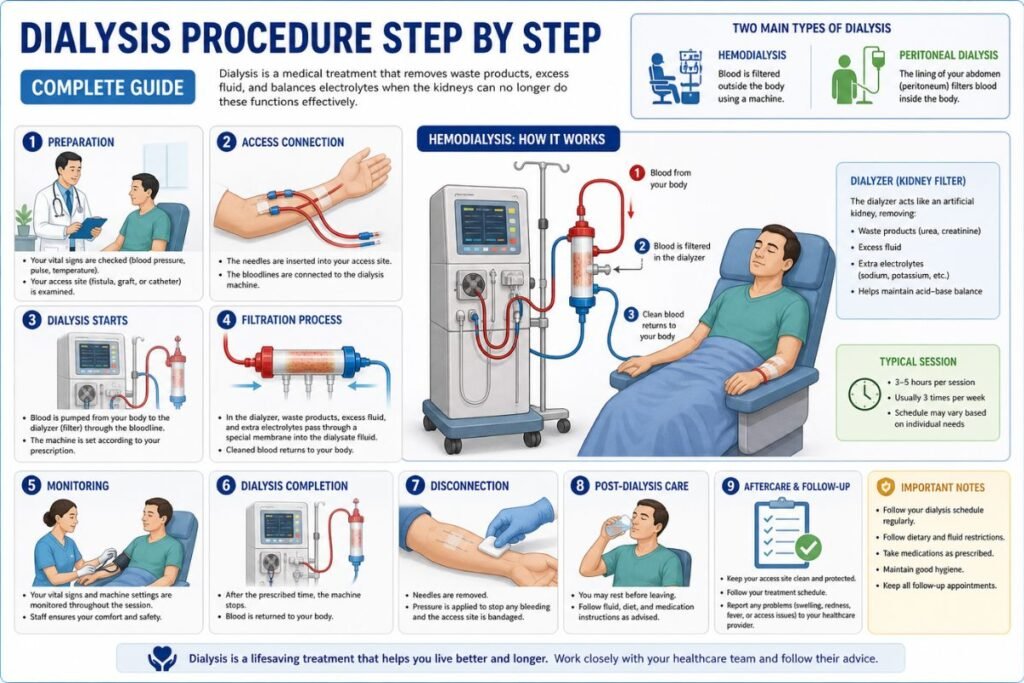
When kidneys stop working properly, the body can no longer remove waste, toxins, and excess fluids efficiently. This is where dialysis becomes a life-saving treatment. In this detailed guide, we will explain the dialysis procedure step by step, along with how it works, its types, and what patients can expect.
Dialysis is a medical process that performs the essential functions of healthy kidneys. To fully understand this treatment, it’s important to first know how dialysis works in the body and why it is necessary for patients with kidney failure, often under the guidance of the Best Urologist Doctor in Hansi for proper care and management.
What Is Dialysis?
Dialysis is a treatment used for people suffering from advanced kidney disease or kidney failure. The kidneys play a crucial role in filtering blood, removing toxins, balancing electrolytes, and controlling fluid levels. When they fail, harmful substances build up in the body.
Dialysis acts as an artificial replacement for lost kidney function. It helps:
- Remove waste products like urea and creatinine
- Maintain electrolyte balance
- Control blood pressure
- Remove excess fluid
This life-supporting treatment is often required when a patient reaches end-stage renal disease (ESRD).
Kidney Dialysis Process Explained
To better understand the treatment, let’s break down the kidney dialysis process explained in simple terms.
Dialysis works by using a special membrane and fluid to filter waste from the blood. Depending on the type of dialysis, this process happens either outside the body (hemodialysis) or inside the body (peritoneal dialysis).
Basic Principle:
- Blood or body fluids pass through a semi-permeable membrane
- Waste and extra fluids move across the membrane
- Cleaned blood or fluid is returned to the body
This process mimics the natural filtering function of healthy kidneys.
Dialysis Procedure Step by Step
Here is the dialysis procedure step by step for better clarity:
1. Patient Preparation
Before starting dialysis:
- Vital signs like blood pressure and weight are checked
- Access site is cleaned (arm or abdomen depending on type)
- Machine settings are adjusted according to patient needs
2. Creating Access to the Bloodstream
For hemodialysis, a vascular access is required:
- Fistula (preferred, created surgically)
- Graft (synthetic tube)
- Catheter (temporary option)
This access allows blood to flow to and from the dialysis machine.
3. Blood Circulation Through the Machine
- Blood is drawn from the body
- It enters a dialysis machine called a dialyzer (artificial kidney)
- The machine filters toxins and excess fluids
4. Filtration Process
Inside the dialyzer:
- Blood flows through thin fibers
- Dialysis fluid (dialysate) flows on the other side
- Waste products move from blood to fluid
This is where the actual cleaning happens.
5. Returning Clean Blood
- Filtered blood is returned to the body
- This cycle continues for several hours
6. Monitoring During Treatment
- Blood pressure and heart rate are monitored
- Adjustments are made if needed
- Any discomfort is addressed
7. Completion of Session
- Blood is safely returned
- Access site is cleaned and covered
- Patient is advised to rest
A typical session lasts 3–5 hours, usually done 3 times a week.
Types of Dialysis Treatment
There are different types of dialysis treatment, and the choice depends on the patient’s condition, lifestyle, and guidance from the Medicine Department, along with proper medical advice.
1. Hemodialysis
- Most common type
- Blood is filtered using a machine
- Done in hospitals or dialysis centers
2. Peritoneal Dialysis
- Uses the lining of the abdomen (peritoneum)
- Dialysis fluid is inserted into the belly
- Waste is removed through natural filtration
3. Continuous Renal Replacement Therapy (CRRT)
- Used in critically ill patients
- Slow and continuous process
- Performed in ICU settings
How Dialysis Works in the Body
To understand how dialysis works in the body, imagine it as an artificial kidney system.
- It removes waste like urea and toxins
- Maintains sodium, potassium, and other electrolytes
- Balances fluid levels
- Prevents complications like swelling and high blood pressure
Without dialysis, toxic substances would build up, leading to serious health risks.
Who Needs Dialysis?
Dialysis is recommended for patients with:
- Chronic Kidney Disease (CKD) stage 5
- Kidney failure (ESRD)
- Severe fluid overload
- High toxin levels in blood
Common causes include:
- Diabetes
- High blood pressure
- Genetic disorders
- Infections
Benefits of Dialysis
Dialysis provides several life-saving benefits:
- Improves quality of life
- Removes harmful toxins
- Controls blood pressure
- Reduces swelling
- Helps maintain energy levels
While it is not a cure, it significantly prolongs life.
Risks and Side Effects
Like any medical procedure, dialysis has some risks:
Common Side Effects:
- Fatigue
- Low blood pressure
- Muscle cramps
- Itching
Possible Complications:
- Infection at access site
- Blood clots
- Fluid imbalance
Proper care and monitoring can reduce these risks.
Lifestyle Tips for Dialysis Patients
Living with dialysis requires certain lifestyle adjustments:
Diet
- Limit sodium and potassium
- Control fluid intake
- Eat high-quality protein
Physical Activity
- Stay active with light exercises
- Avoid overexertion
Medication
- Follow prescribed medicines strictly
Mental Health
- Stay positive
- Seek support from family or groups
Conclusion
Understanding the dialysis procedure step by step helps patients and caregivers feel more confident and prepared. This treatment plays a vital role in replacing kidney function and maintaining life, especially in critical cases requiring support from facilities like the 24 Hours Intensive Care Unit Hansi.
From learning the kidney dialysis process explained to exploring the types of dialysis treatment and comparing hemodialysis vs peritoneal dialysis, it’s clear that dialysis is a complex yet highly effective medical solution.
Most importantly, knowing how dialysis works in the body allows patients to take better control of their health and lifestyle.
FAQs
1. Is dialysis painful?
No, the process is generally not painful, though needle insertion may cause mild discomfort.
2. How long can a person live on dialysis?
Many people live for years on dialysis with proper care.
3. Can dialysis cure kidney disease?
No, it only replaces kidney function. A kidney transplant is the only permanent solution.
4. Can dialysis be done at home?
Yes, peritoneal dialysis and home hemodialysis are options.