- MALIK SUPER SPECIALITY HOSPITAL HANSI
- info@maliksuperspecialityhospital.com

Cardiac Arrest First Aid Tips: A Practical Guide for Families

🌙 Karwa Chauth & Pregnancy: Do’s and Don’ts By Dr. Rakshita
September 29, 2025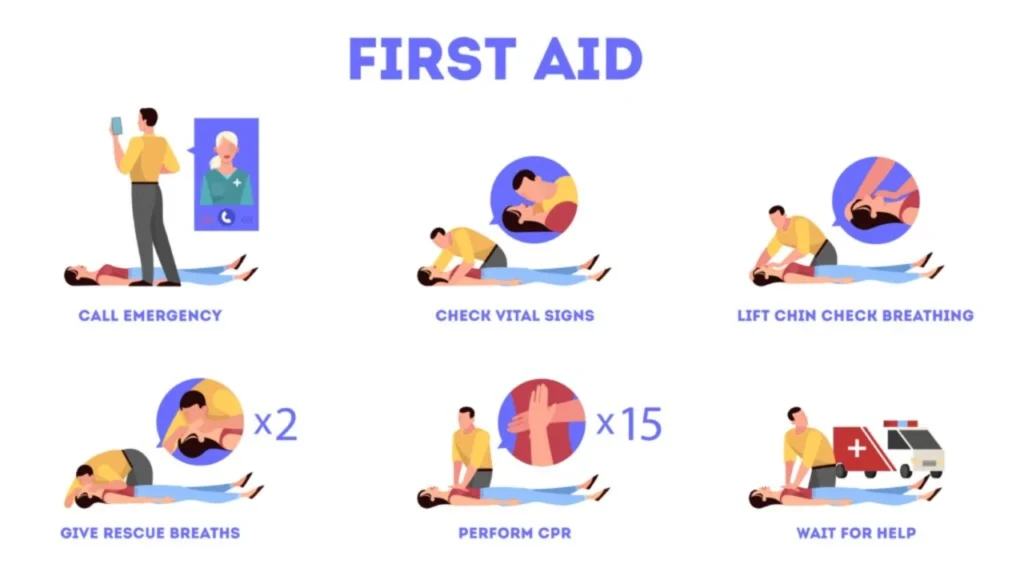
When someone’s heart suddenly stops beating, every second counts. Cardiac arrest can happen anywhere—at home, at work, on the road, or in a market. Quick action from a bystander often makes the difference between life and death. This guide from Malik Super Speciality Hospital, Hansi (Haryana), explains how to recognize cardiac arrest and what to do immediately, even if you’ve never taken a first-aid class.
Cardiac arrest vs. heart attack: know the difference
- Cardiac arrest is an electrical problem: the heart stops pumping effectively. The person collapses, doesn’t respond, and isn’t breathing normally (or is gasping). Without immediate CPR and a shock from an AED, survival drops quickly with each passing minute.
- Heart attack is a circulation problem: a blocked artery reduces blood flow to the heart muscle. The person is usually awake and may have chest pain, sweating, nausea, or breathlessness. A heart attack can lead to cardiac arrest, but the first steps are different.
If a person collapses and isn’t responding, treat it as cardiac arrest and act fast.
The first minute: your lifesaving checklist
- Ensure safety. Look for traffic, electricity, water, or fire hazards.
- Check responsiveness. Tap the shoulders and shout: “Are you okay?”
- Call for help immediately.
- Dial 108 (ambulance), 112 (all-in-one emergency), or your local emergency number.
- Put your phone on speaker so the dispatcher can guide you.
- Dial 108 (ambulance), 112 (all-in-one emergency), or your local emergency number.
- Check breathing. If the person is not breathing or only gasping (agonal breathing), start chest compressions now. Do not waste time checking a pulse if you’re not trained.
Remember: Call first. Compress fast. Use an AED as soon as possible.
Hands-only CPR (for adults and teens)
If you’re not trained in full CPR, hands-only CPR is simple and highly effective until professionals arrive.
- Position the person. Lay them flat on a firm surface.
- Hand placement. Kneel beside the chest. Put the heel of one hand in the center of the chest (on the lower half of the breastbone). Place your other hand on top and interlock your fingers.
- Body posture. Keep your shoulders directly above your hands. Arms straight.
- Compress hard and fast.
- Push down about 5–6 cm on each compression.
- Aim for 100–120 compressions per minute (think of a quick, steady beat).
- Let the chest rise fully between compressions—don’t lean on it.
- Push down about 5–6 cm on each compression.
- Don’t stop. Continue until an AED is ready, the person starts breathing normally, or emergency medical staff take over.
Tip: If someone nearby is available, ask them to take turns every 2 minutes to prevent fatigue.
Using an AED (Automated External Defibrillator)
AEDs are designed for the public—no medical background needed. You may find them at malls, offices, factories, hotels, schools, gyms, and airports.
- Turn it on and follow the voice prompts.
- Expose the chest and wipe it dry if wet.
- Attach pads as shown on the diagrams (one pad on the upper right chest, the other on the left side below the armpit).
- Ensure no one is touching the person while the AED analyzes the heart rhythm.
- If the AED says “Shock advised,” say “Everyone clear,” check no one is touching the patient, press the shock button, then immediately resume chest compressions.
- If “No shock advised,” continue CPR. The AED will reanalyze periodically.
Using an AED quickly—ideally within the first 3–5 minutes—can dramatically increase survival.
CPR for children and infants (quick adjustments)
If a child (1 year to puberty) or infant (under 1 year) is unresponsive and not breathing normally:
- Alone? Perform 2 minutes of CPR first, then call emergency services if no one else is available.
- Compression depth:
- Children: about one-third of chest depth (roughly 5 cm).
- Infants: about one-third of chest depth (roughly 4 cm).
- Children: about one-third of chest depth (roughly 5 cm).
- Hands:
- Children: one or two hands on the center of the chest.
- Infants: use two fingers in the center of the chest just below the nipple line.
- Children: one or two hands on the center of the chest.
- If you’re trained, add 30 compressions + 2 rescue breaths. If you’re not trained or unsure, stick to hands-only CPR.
What if the person starts breathing?
If the person regains normal breathing but remains unresponsive:
- Place them in the recovery position (on their side with the head tilted slightly back to keep the airway open).
- Keep monitoring breathing.
- Be ready to restart CPR if breathing stops again.
If they wake up and are confused, keep them warm and reassure them until help arrives.
Special situations you might face in Hansi
- Drowning: Give 2 rescue breaths first if you’re trained, then start compressions. If not trained, begin hands-only CPR. Remove the person from water to a safe, firm surface quickly if possible.
- Electric shock: Ensure the power source is off before touching the person.
- Trauma (road accidents): Prioritize safety and call for help. If you suspect spinal injury, minimize movement; still perform chest compressions if the person is unresponsive and not breathing.
- Pregnancy: Perform compressions in the usual position. If the abdomen is large, you can tilt the person slightly to the left (place something under the right hip) to relieve pressure on major blood vessels—only if feasible and safe.
- Suspected drug overdose: Treat as cardiac arrest if unresponsive and not breathing—start CPR and use AED if available.
Common mistakes to avoid
- Waiting to see “if they’ll be okay.” Precious time is lost. Start CPR if there’s any doubt about breathing.
- Shallow or slow compressions. Compressions must be deep and fast with full chest recoil.
- Long pauses. Keep interruptions under 10 seconds—resume compressions immediately after a shock or check.
- Too many people touching the patient during analysis/shock. Make sure everyone is clear.
After a cardiac arrest: what happens next
Even when a person wakes up, they still need hospital care. Cardiac arrest survivors often require advanced treatment like defibrillation, medications, coronary angiography, targeted temperature management, and monitoring for complications. Early hospital care improves outcomes and prevents recurrence.
Bring any information you have for the medical team: what you witnessed, how long the person was unresponsive, when CPR started, and whether an AED delivered shocks.
How Malik Super Speciality Hospital, Hansi supports your community
At Malik Super Speciality Hospital, Hansi (Haryana), our emergency department is equipped to handle cardiac emergencies around the clock. Here’s how we can help:
- 24×7 Emergency Care: Rapid triage, cardiac monitoring, and lifesaving interventions.
- Ambulance coordination: When you call 108 or 112, request transport to the nearest equipped facility; our team coordinates closely to prepare for arrival.
- BLS and CPR training for communities and workplaces: We can arrange Basic Life Support (BLS) sessions for schools, factories, offices, and resident welfare associations in and around Hansi.
- Post-event evaluation: For anyone who faints, has chest discomfort, palpitations, or breathlessness, we offer ECG, cardiac enzyme testing, echocardiography, and specialist consultations to identify risks early.
If you’re a school or company in Hansi, reach out to schedule a CPR/AED awareness session for your staff and students. Knowing what to do can save a colleague, a parent, or a neighbor.
Quick reference: what to do right now
- Unresponsive + not breathing normally = cardiac arrest.
- Call 108/112 and put your phone on speaker.
- Start hands-only CPR: center of chest, 100–120/min, 5–6 cm deep, full recoil.
- Use an AED as soon as it’s available. Follow its voice prompts.
- Don’t stop until help takes over or the person breathes normally.